


-

23 December 2024
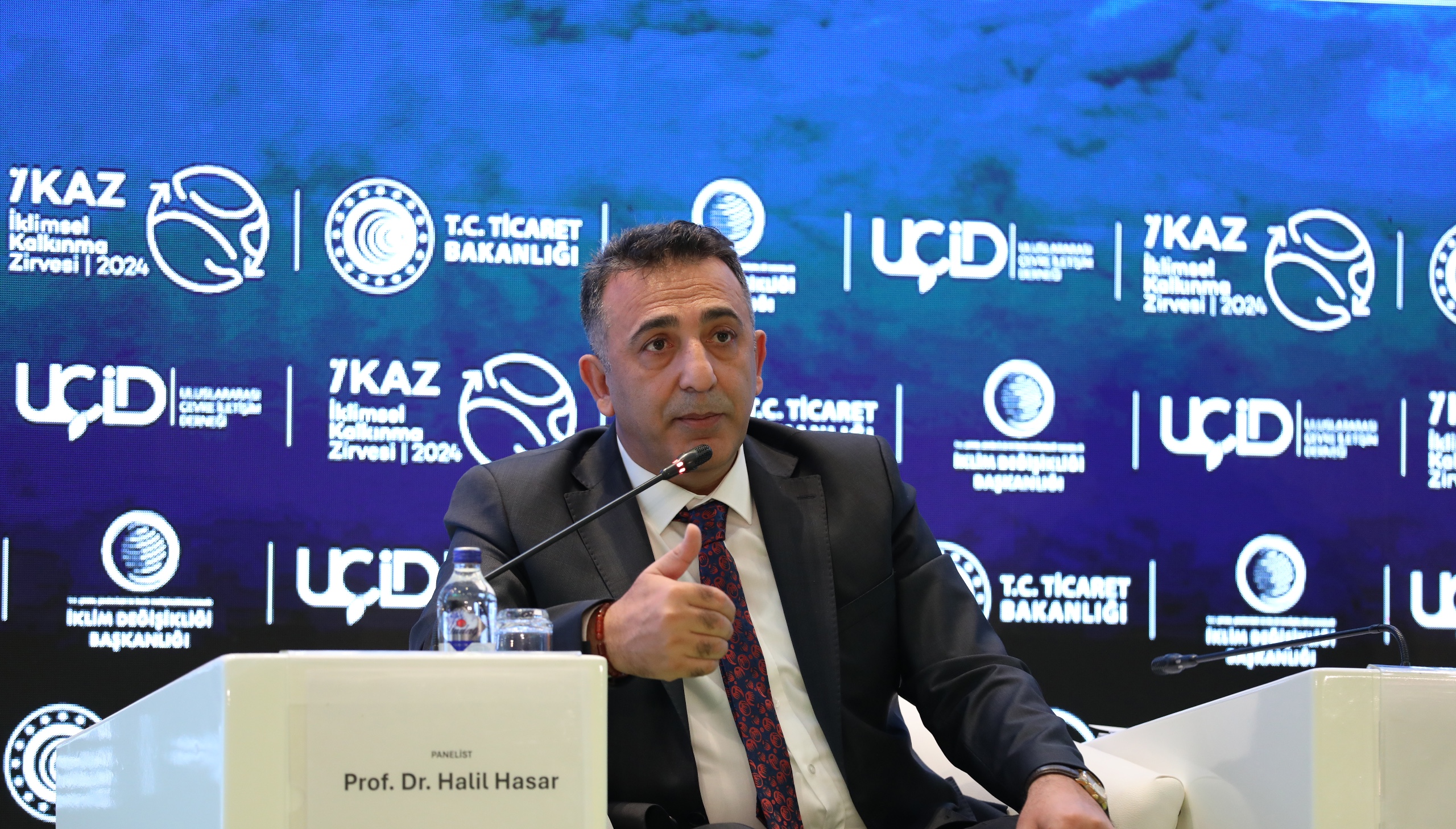
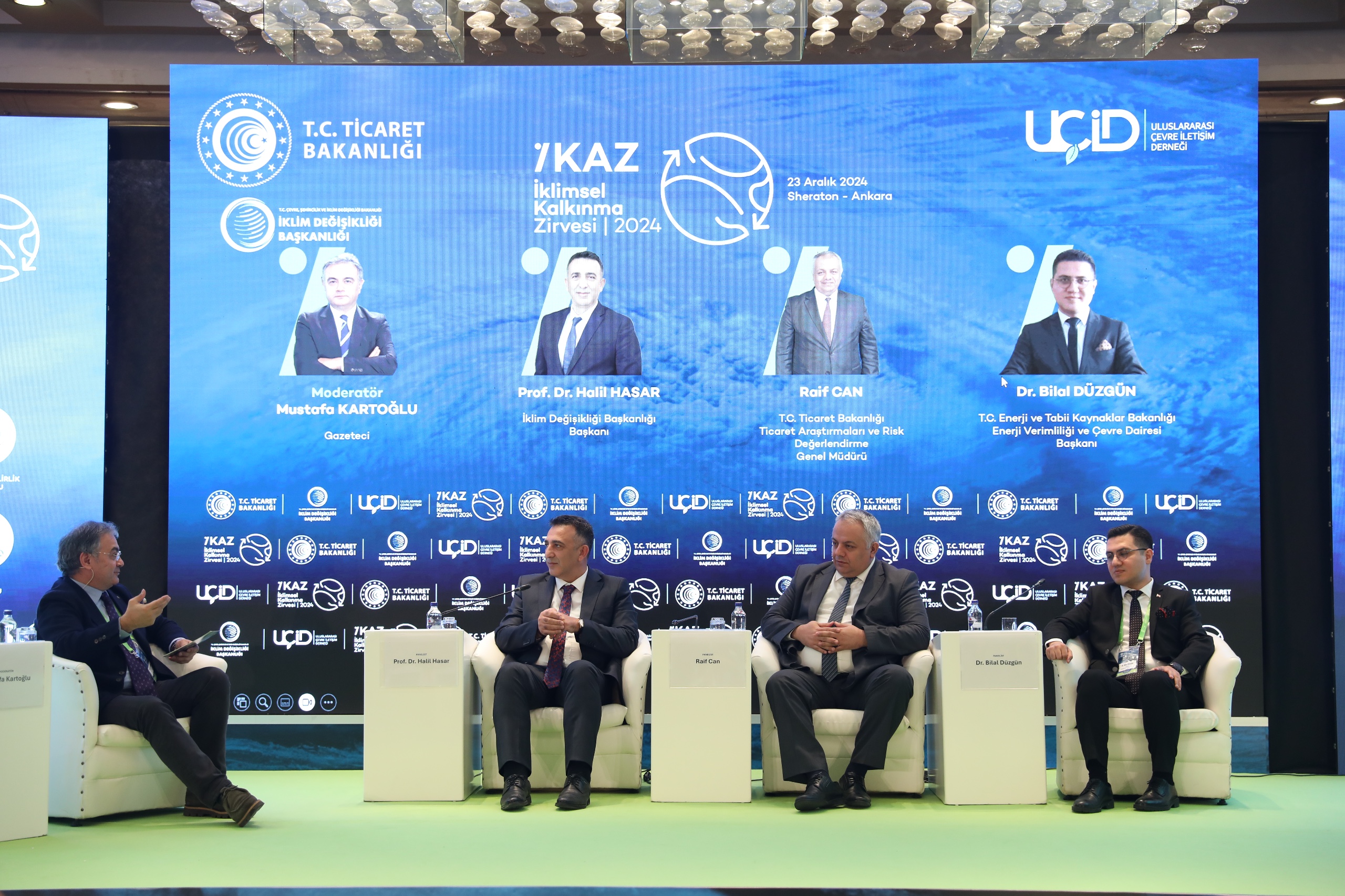
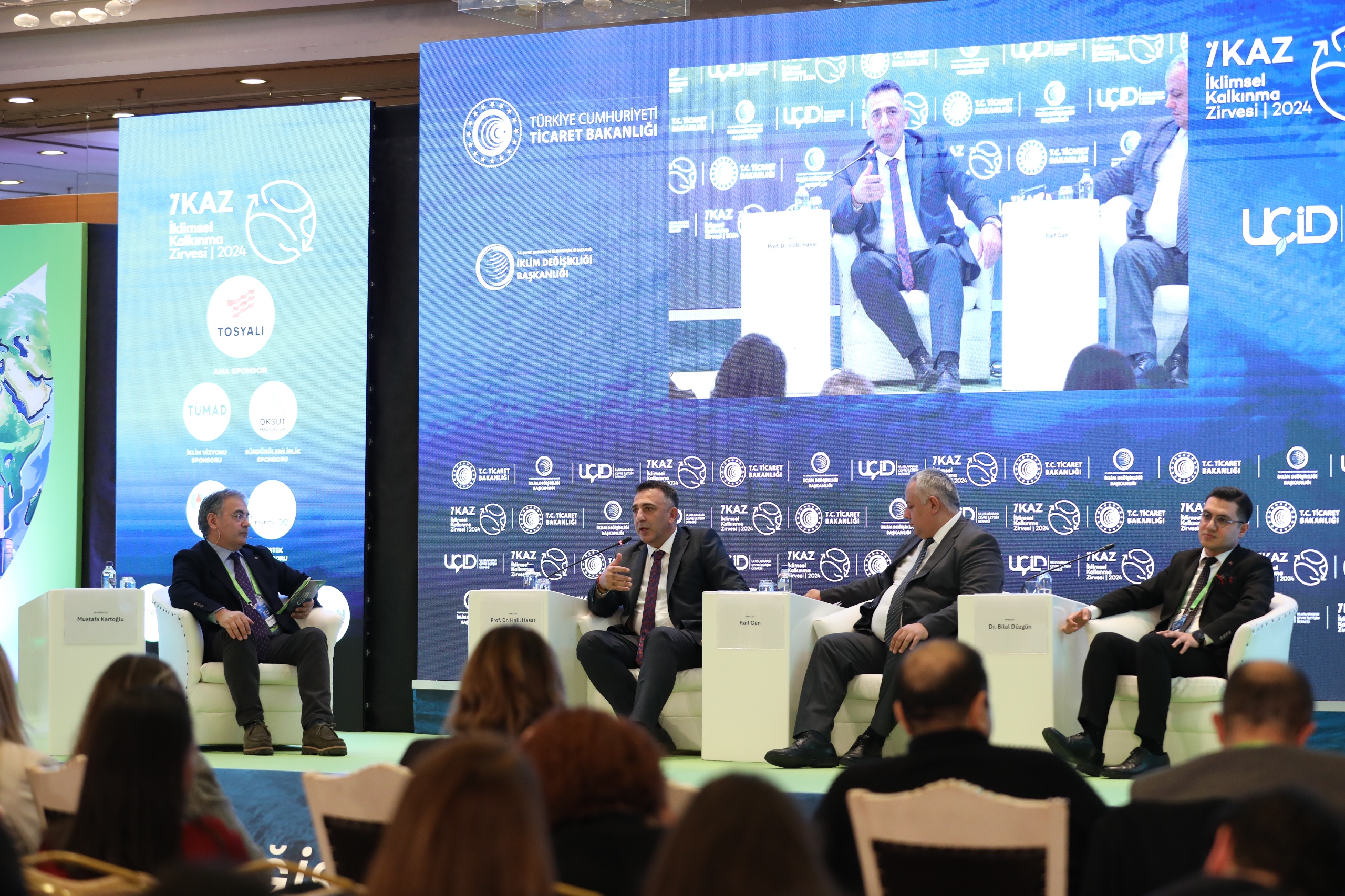
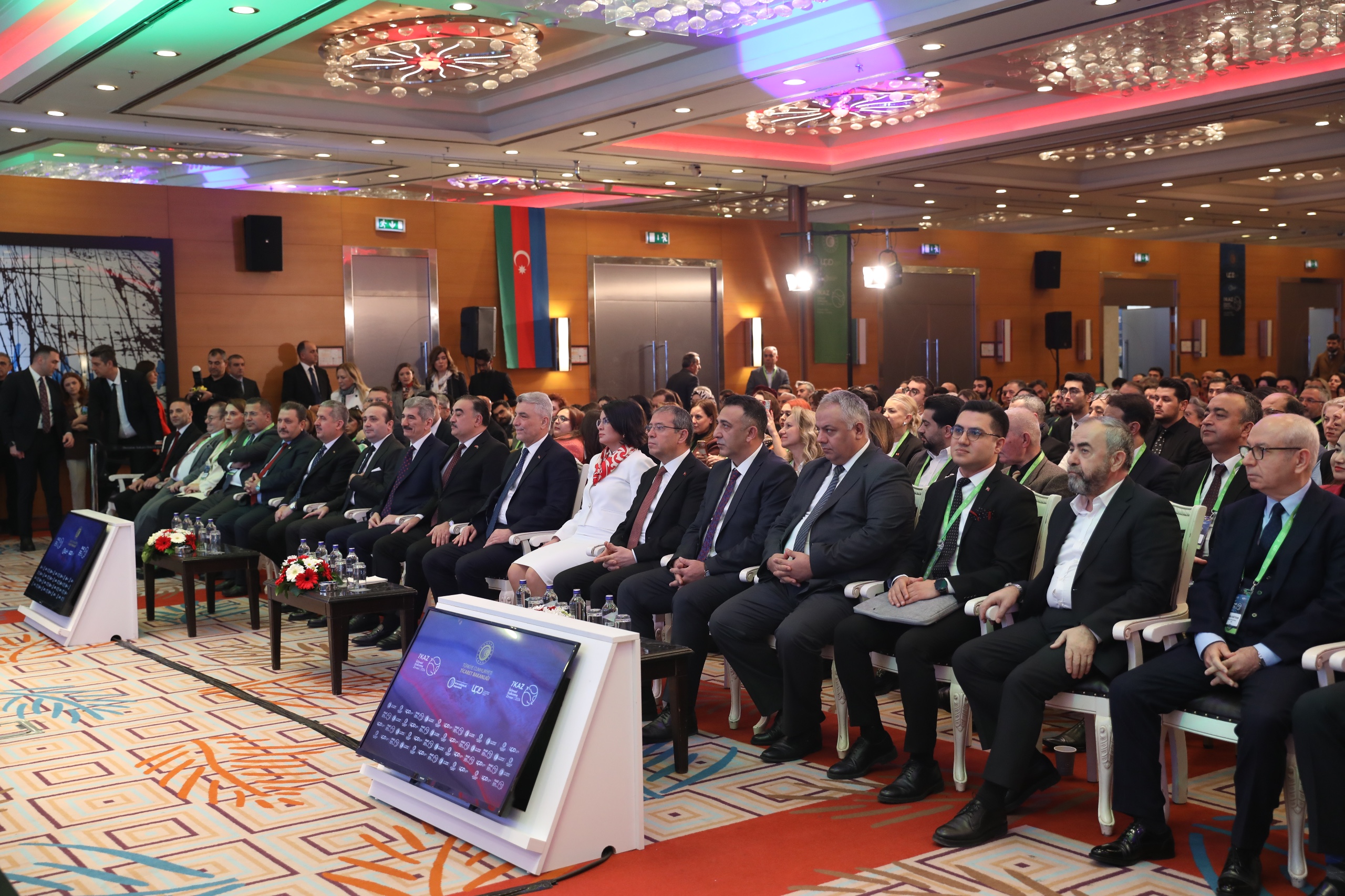
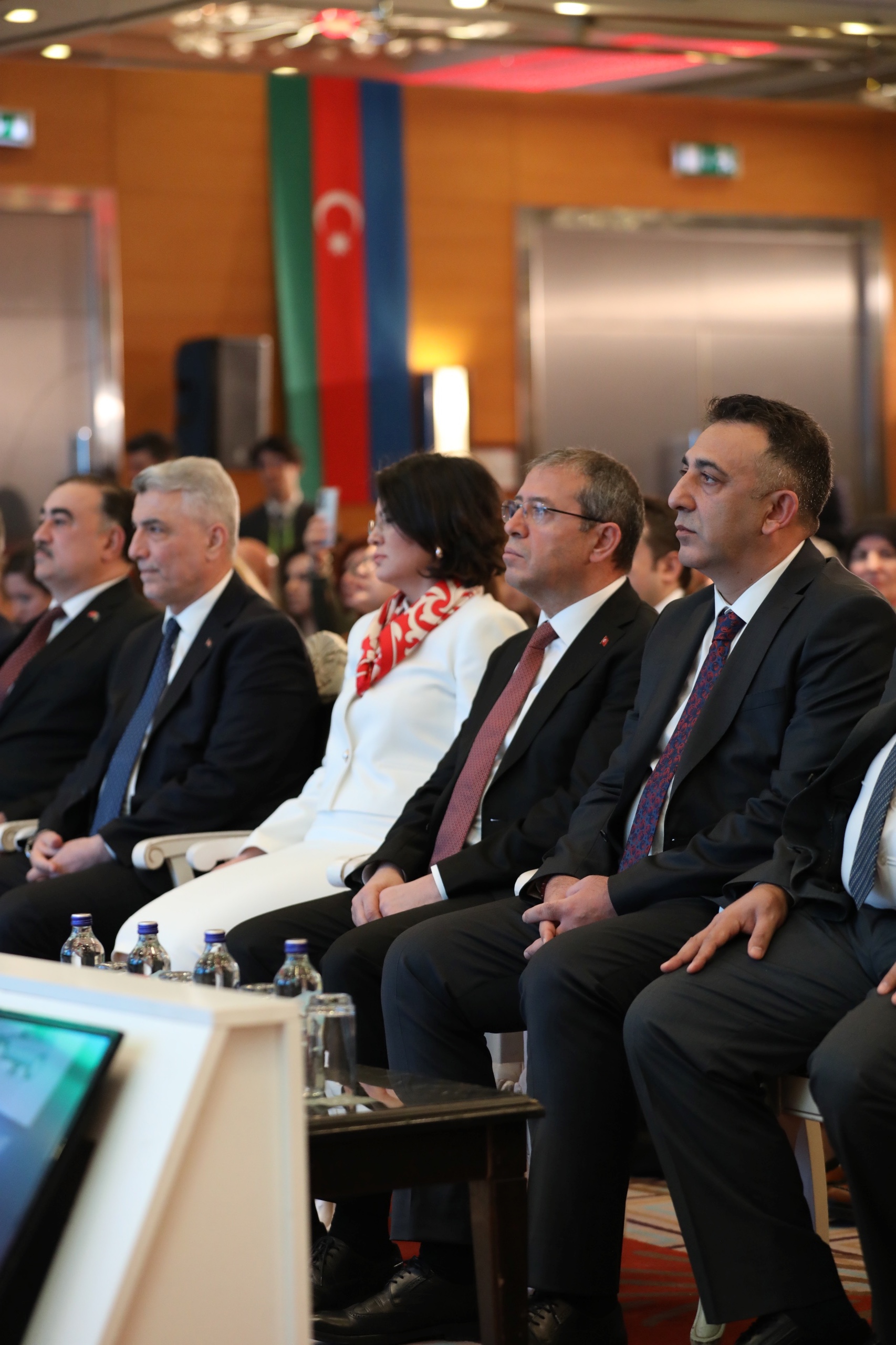
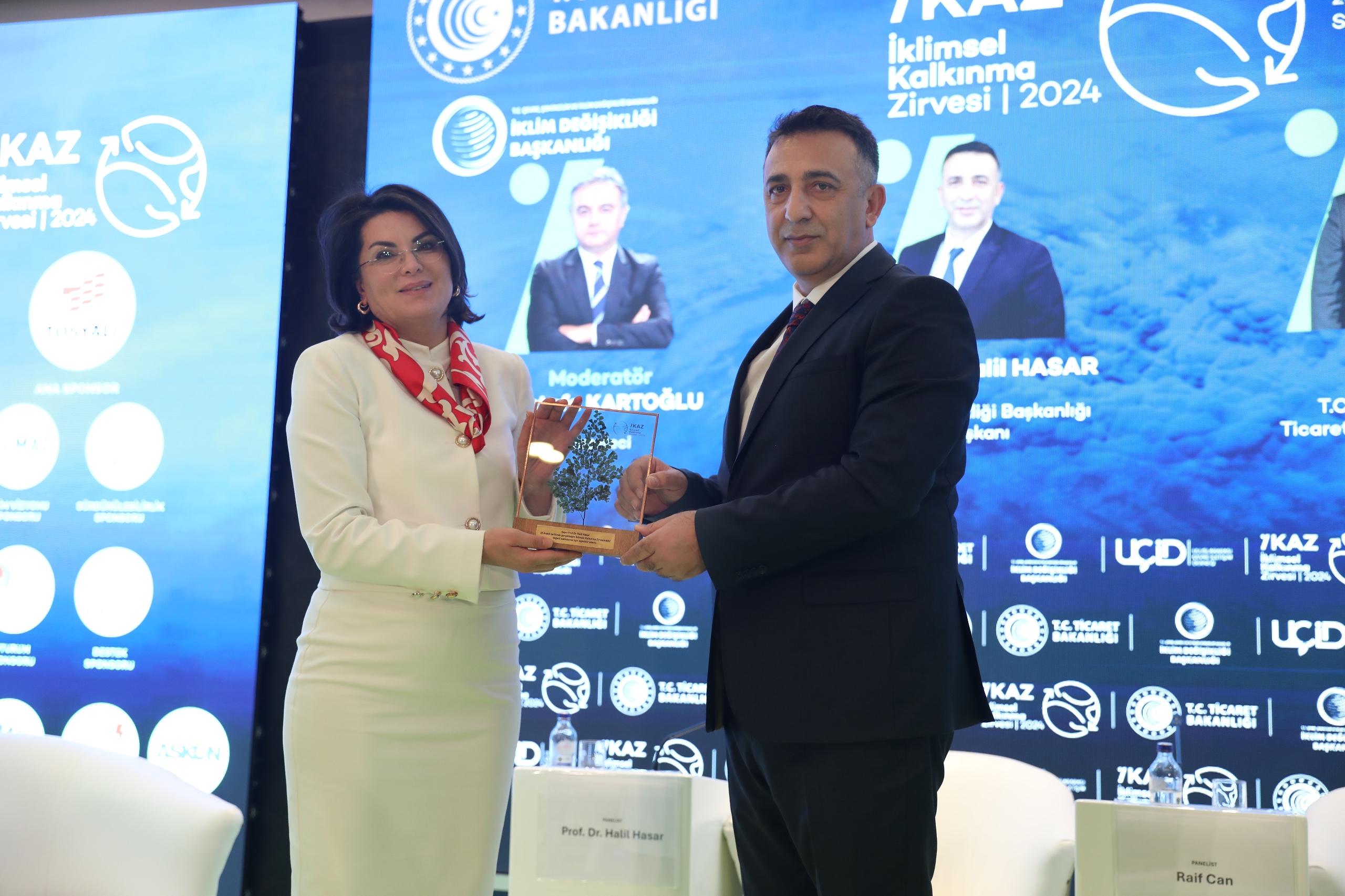
Director of Climate Change Prof. Halil Hasar attended the Climate Development Summit, which was organized in Ankara by the International Environmental Communication Association.
The summit opened with remarks by Minister of Trade Ömer Bolat and featured sessions on “Investment Finance and Climate” and “Public Policies and Türkiye’s Roadmap.”
Speaking at the summit, which was held with the support of the Directorate of Climate Change, Hasar focused on the global and national impacts of climate change and the measures required for the future.
He stressed that climate change is a far-reaching crisis whose impacts are felt across many spheres, from the economy and the social order to global stability and human security.
Hasar also shared the outcomes of COP29, highlighting key decisions and Türkiye’s gains.
Key messages from Director Hasar’s remarks included:
“The global climate finance architecture will undergo a fundamental transformation.”
One of the most notable outcomes of COP29 was the adoption of the New Collective Quantified Goal (NCQG), which sets an annual climate finance target of USD 1.3 trillion to be mobilized from public and private sources by 2035. The NCQG represents an innovative financing structure designed to meet the needs of developing countries. It is built on a two-layer structure,
with an inner core target of USD 300 billion—tripling the previous USD 100 billion goal. And under its outer layer, a program titled the “Baku to Belém Roadmap to 1.3T” will be established to achieve the overall USD 1.3 trillion target. Negotiations under Article 6 were also concluded, establishing a global framework for carbon markets aimed at creating critical financial resources for greenhouse gas mitigation and climate change adaptation. Financial flows from carbon markets are projected to reach USD 1 trillion annually by 2050.
“We will continue to speak out against unfair burden sharing at every opportunity.”
As Türkiye, we have consistently raised—and will continue to raise—the issue of the inequitable burden borne by developing countries like ours. Combating climate change is not only about mobilizing finance, but also about ensuring that resources are used effectively and transparently. While the new USD 1.3 trillion target under the Baku Climate Unity Pact marks a significant step forward, challenges remain in accessing these resources due to the complexity of existing mechanisms and the growing needs of developing countries.
“Türkiye must actively mobilize its resources to deliver on its green transition goals.”
Türkiye plans to actively mobilize national resources to deliver on its green transition goals. We have been developing policy instruments designed to send clear market signals and unlock greater private-sector engagement. At the same time, we have been advancing a range of initiatives aimed at making more effective use of international climate finance. Together, these financing channels are expected to accelerate Türkiye’s climate action—particularly by enabling the rollout of sustainable solutions across the energy, transport, and industrial sectors. As the Directorate of Climate Change, we are working in close coordination with governmental organizations, the private sector, universities, and civil society to steer Türkiye’s climate action and green transition agenda.
“We are nearing the final stage of our work on the National Green Taxonomy and the Emissions Trading System.”
Türkiye is currently developing its National Green Taxonomy. The framework is structured around six environmental objectives: reducing greenhouse gas emissions, strengthening climate adaptation, ensuring the sustainable use and protection of water and marine resources, advancing the circular economy, preventing and controlling pollution, and protecting and restoring biodiversity and ecosystems. In parallel, preparations for the establishment of a national Emissions Trading System (ETS) are nearing completion. These efforts form part of Türkiye’s broader strategy to contribute to the global climate response, accelerate the green transition of its economy, and safeguard—and further strengthen—its international competitiveness through the introduction of a national carbon pricing system.
The summit was attended by Minister of Trade Ömer Bolat, Director of Climate Change Prof. Halil Hasar, Deputy Minister of Energy and Natural Resources Abdullah Tancan, Ambassador of Azerbaijan to Türkiye Reşat Memedov, President of the International Environmental Communication Association Sevda Güner, members of parliament, senior officials from relevant organizations, sector representatives, leading academics, and numerous invited guests.