


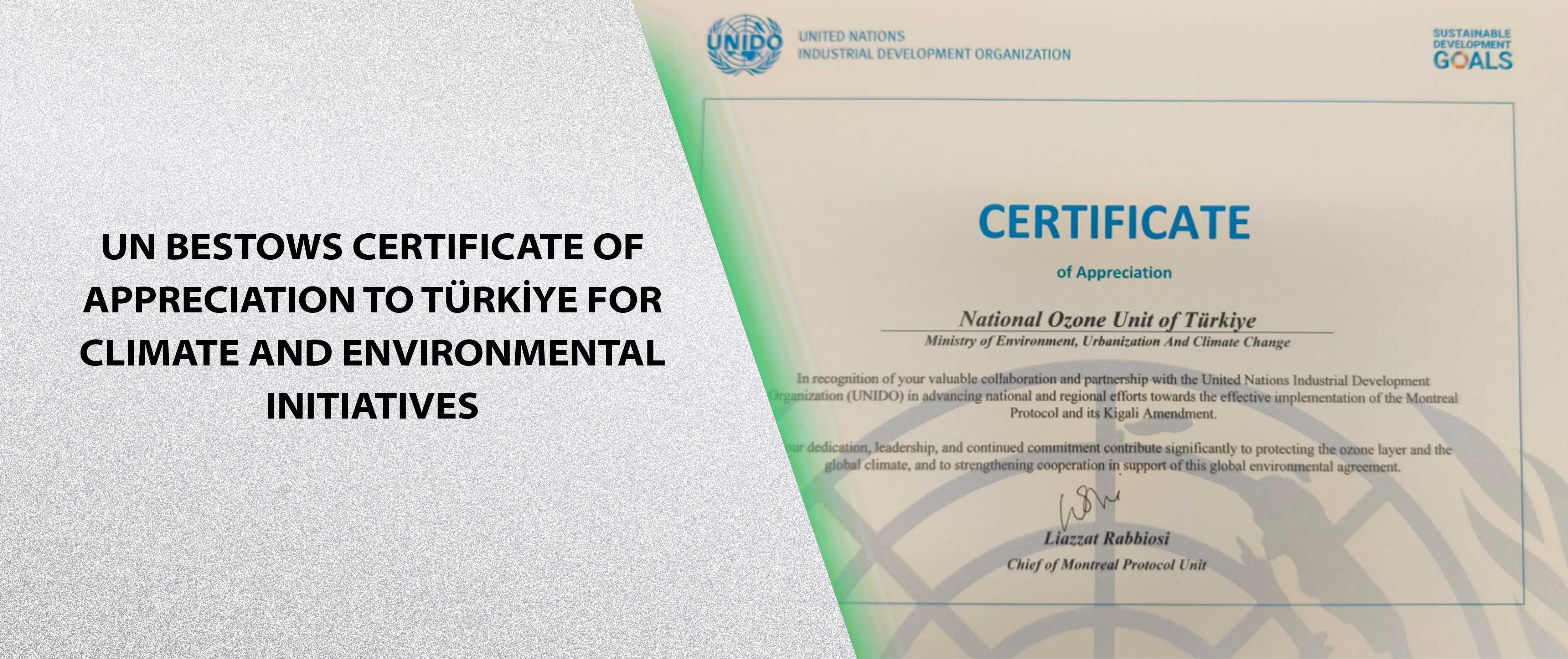
The United Nations Industrial Development Organization (UNIDO) has presented a certificate of appreciation to Türkiye in recognition of its effective strides in environmental and climate policies.
13 April 2026
The United Nations Industrial Development Organization (UNIDO) has presented a certificate of appreciation to Türkiye in recognition of its effective strides in environmental and climate policies.
During a high-level meeting organized by UNIDO, Türkiye was honored with a certificate of appreciation for its significant contributions to the effective implementation of the Montreal Protocol, which aims to phase out ozone-depleting substances, and the Kigali Amendment, which targets the limitation of greenhouse gas emissions. Deputy Director of Climate Change Mehrali Ecer accepted the certificate on behalf of Türkiye.
National and Regional Success Validated
Received following the meticulous work coordinated by the Directorate of Climate Change, this certificate serves as international recognition of Türkiye’s national and regional projects, its robust collaborative approach, and its direct contributions to tackling the global climate crisis.
This token of appreciation, awarded by UNIDO in reference to Türkiye's determination to protect the ozone layer, reduce greenhouse gas emissions, and fulfill international environmental obligations, further demonstrates Türkiye’s standing as a strong and reliable global partner through its successful practices under the Montreal Protocol.
Turkish Delegation Attends the International Vienna Energy and Climate Forum
During the two-day visit to Vienna, Deputy Director of Climate Change Mehrali Ecer and the accompanying delegation represented Türkiye at the International Vienna Energy and Climate Forum. The event, where global actions to address the energy and climate crisis were discussed, brought together experts and policymakers from around the world.
The forum addressed key topics critical to the future of the planet.
The summit’s agenda included “Global Cooperation,” “Green Transition,” “Sustainable Development,” and “Energy Efficiency.”