


-
16 February 2026
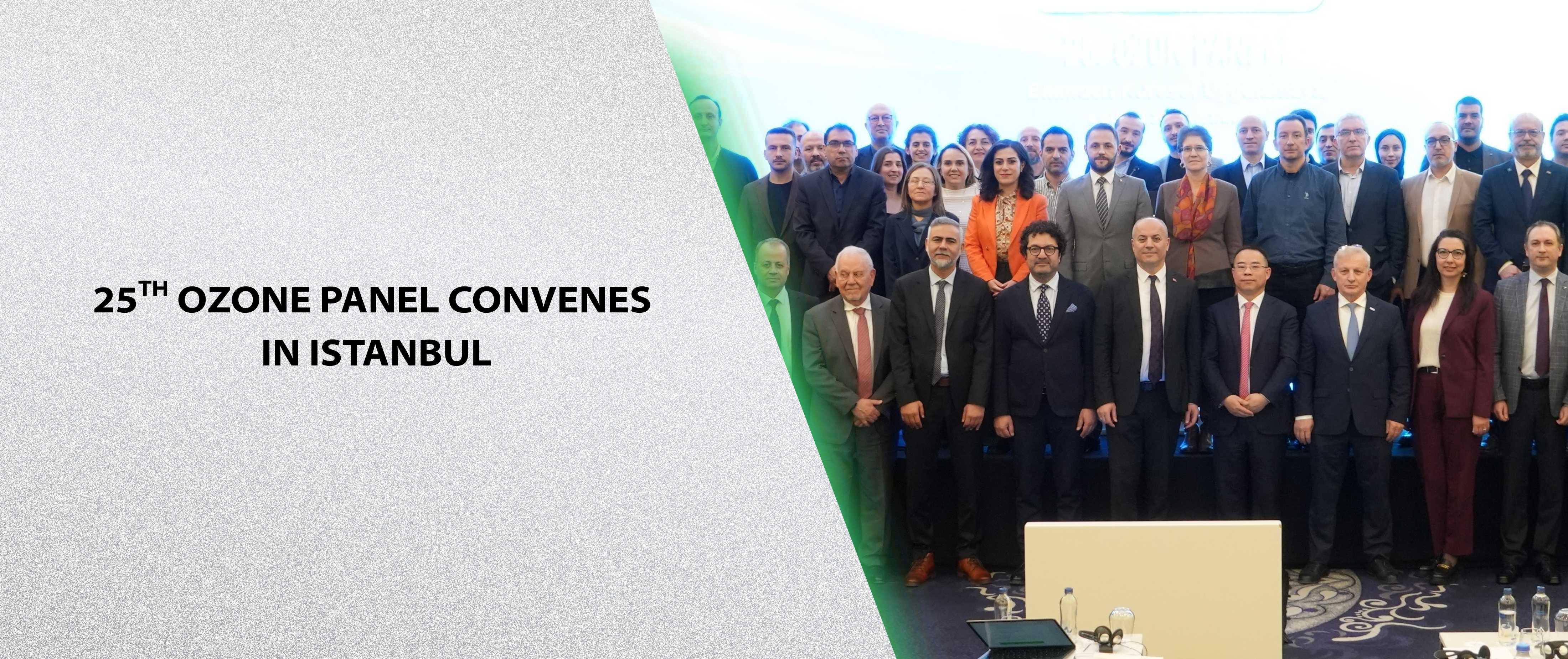
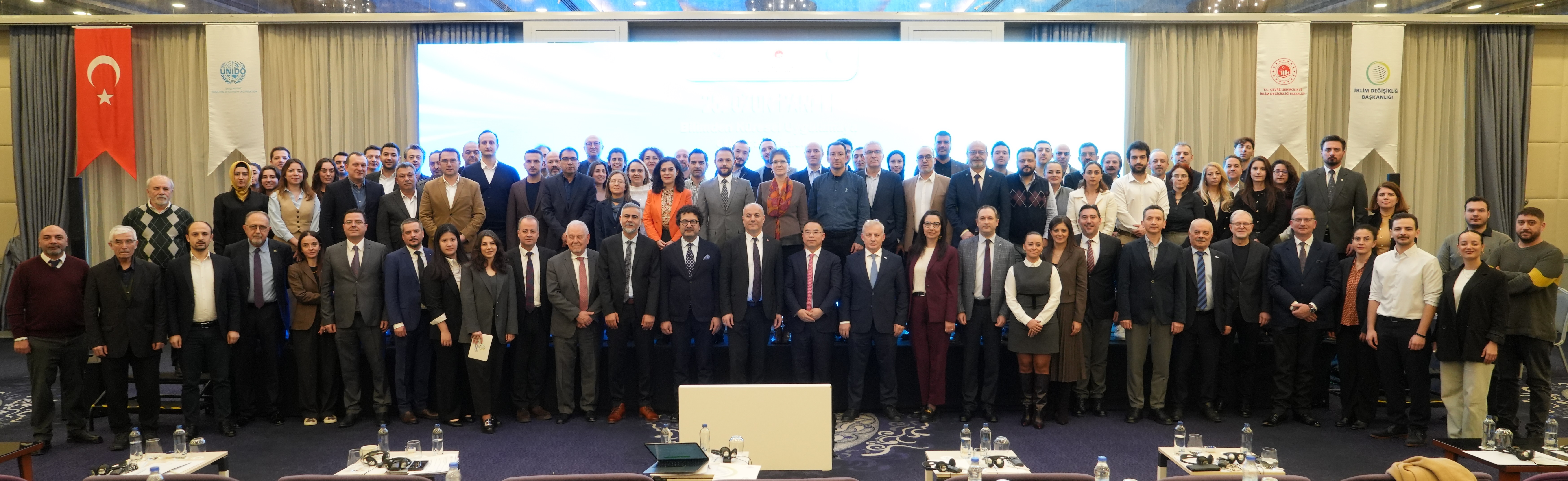
The 25th Ozone Panel, jointly organized by the Directorate of Climate Change and the United Nations Industrial Development Organization (UNIDO), was held in Istanbul under the theme “From Science to Global Action.”
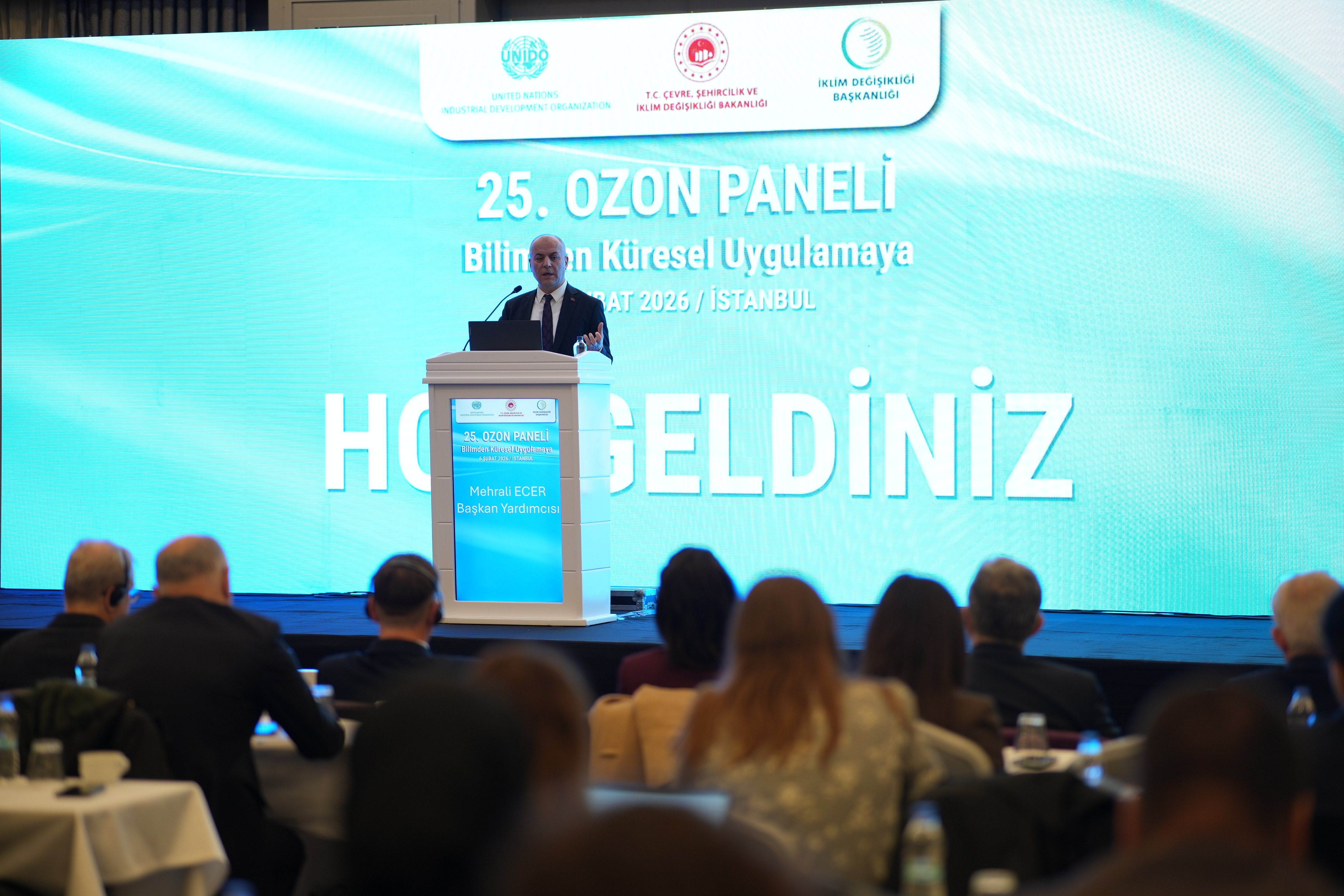
The panel opened with a keynote by Mehrali Ecer, Deputy Director of Climate Change. Highlighting the ongoing efforts under the Montreal Protocol and the Kigali Amendment, Deputy Director Ecer emphasized how protecting the ozone layer serves as a cornerstone in the global fight against climate change. He further underlined the strategic importance of managing fluorinated greenhouse gases (F-gases) to achieve Türkiye’s 2053 Net Zero Emission targets. During the second session of the panel discussion, Volkan Polat, Head of the Greenhouse Gas Monitoring Department at the Directorate of Climate Change, delivered a comprehensive presentation titled “An Overview of How Fluorinated Greenhouse Gases Are Managed.”
The program further detailed Türkiye’s milestones within the HCFC Phase-out Management Plan (HPMP) and the strategic transition toward the Kigali Implementation Plan (KIP). The discussions centered on alternative technologies and energy efficiency within the refrigeration and air conditioning (RAC) sectors.
Under the Kigali Implementation Plan (KIP), the panel delved into the R290 transition in the RAC industry and the integration of natural refrigerants in mobile air conditioning to optimize both cabin comfort and battery longevity. Additionally, projects aimed at enhancing energy efficiency in Türkiye’s refrigeration, air conditioning, and heat pump (RACHP) manufacturing sectors were highlighted.
The sessions also addressed the life-cycle management of refrigerants, focusing on Recovery, Recycling, and Reclamation (RRR) processes. This included an overview of Türkiye’s ODS/HFC stock inventories, future waste flow projections, and the Circular on the Management of Waste Fluorinated Greenhouse Gases.
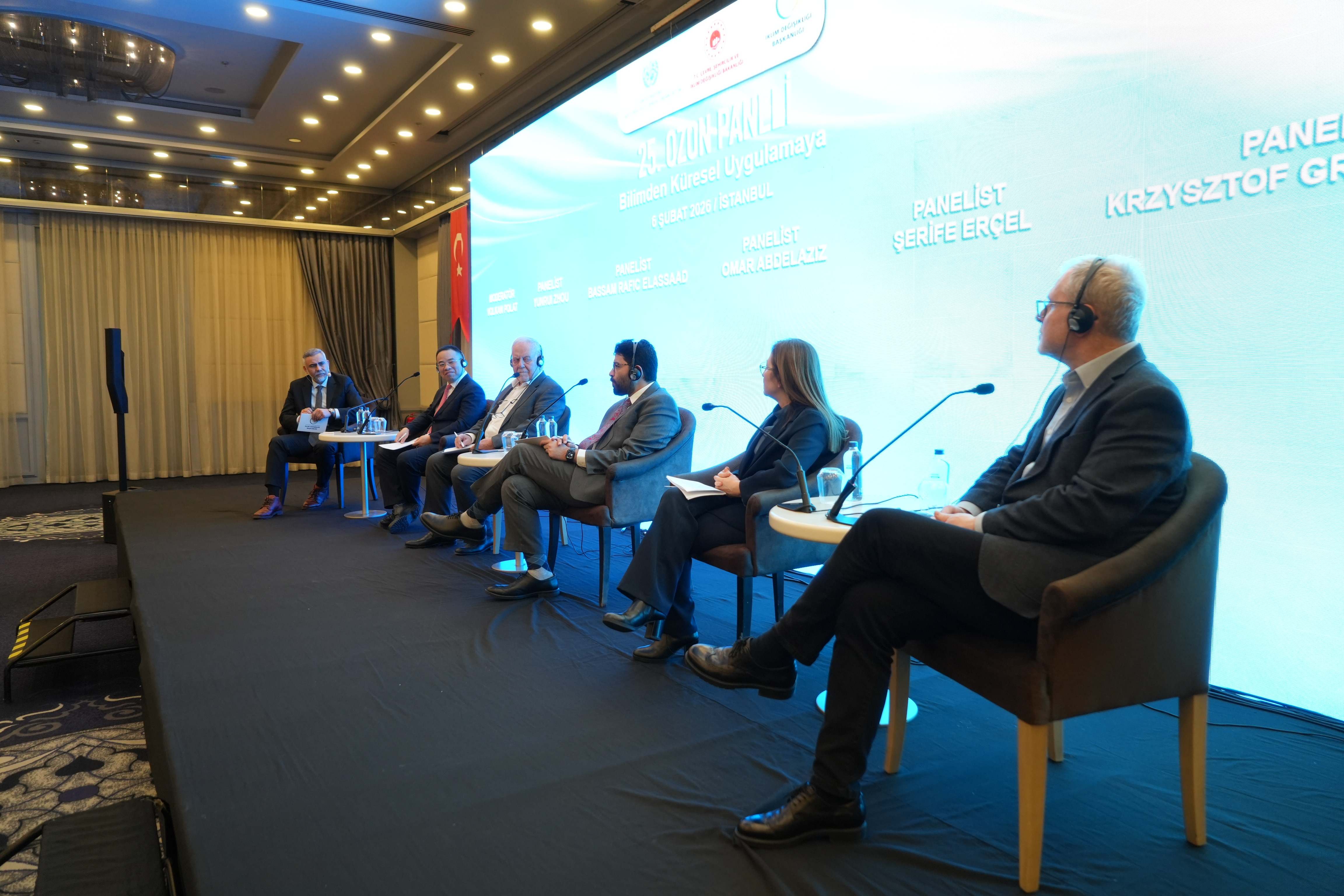
The program concluded with a panel discussion outlining the critical pillars and potential operational challenges of Türkiye’s strategy under the Kigali Amendment.