


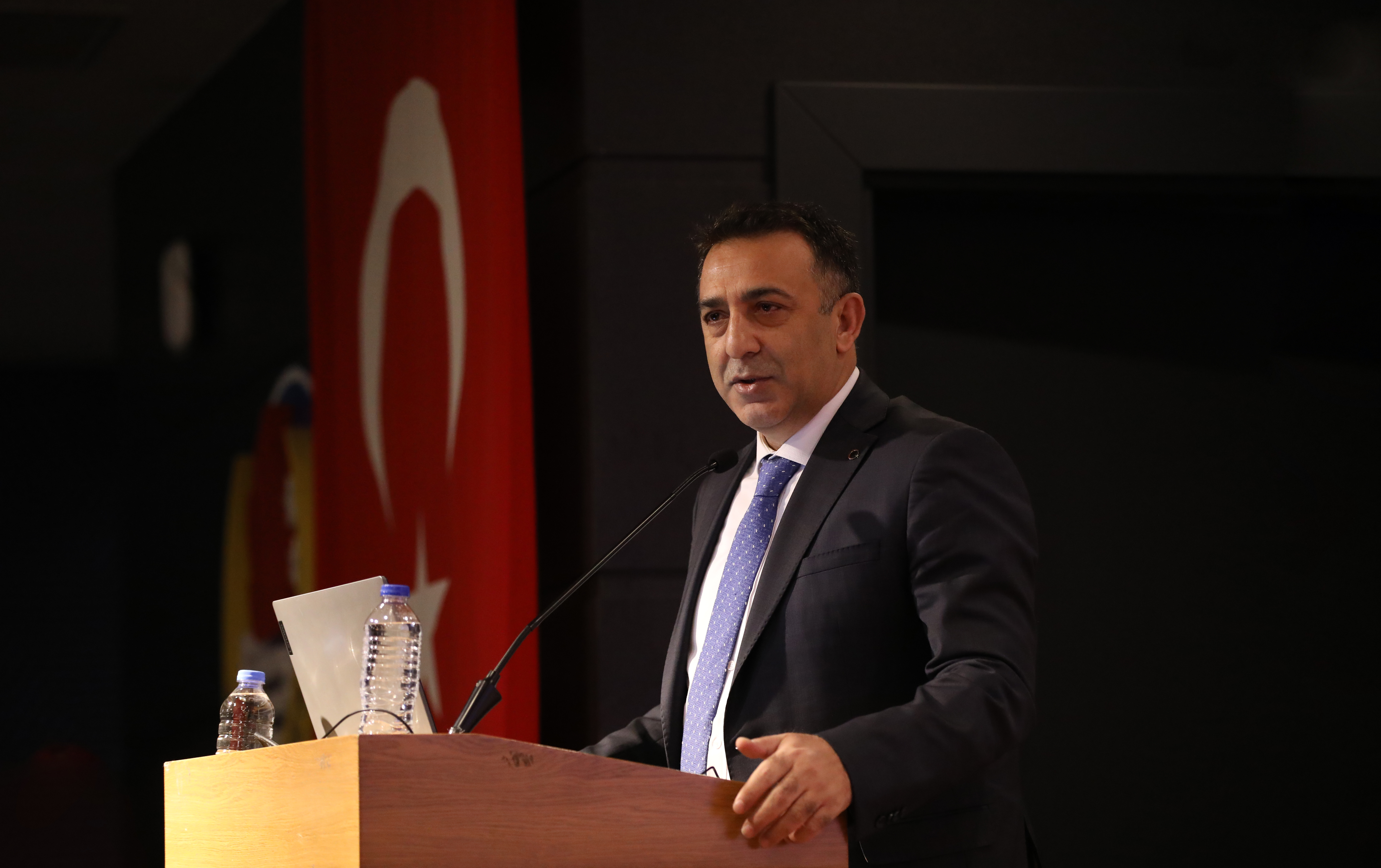
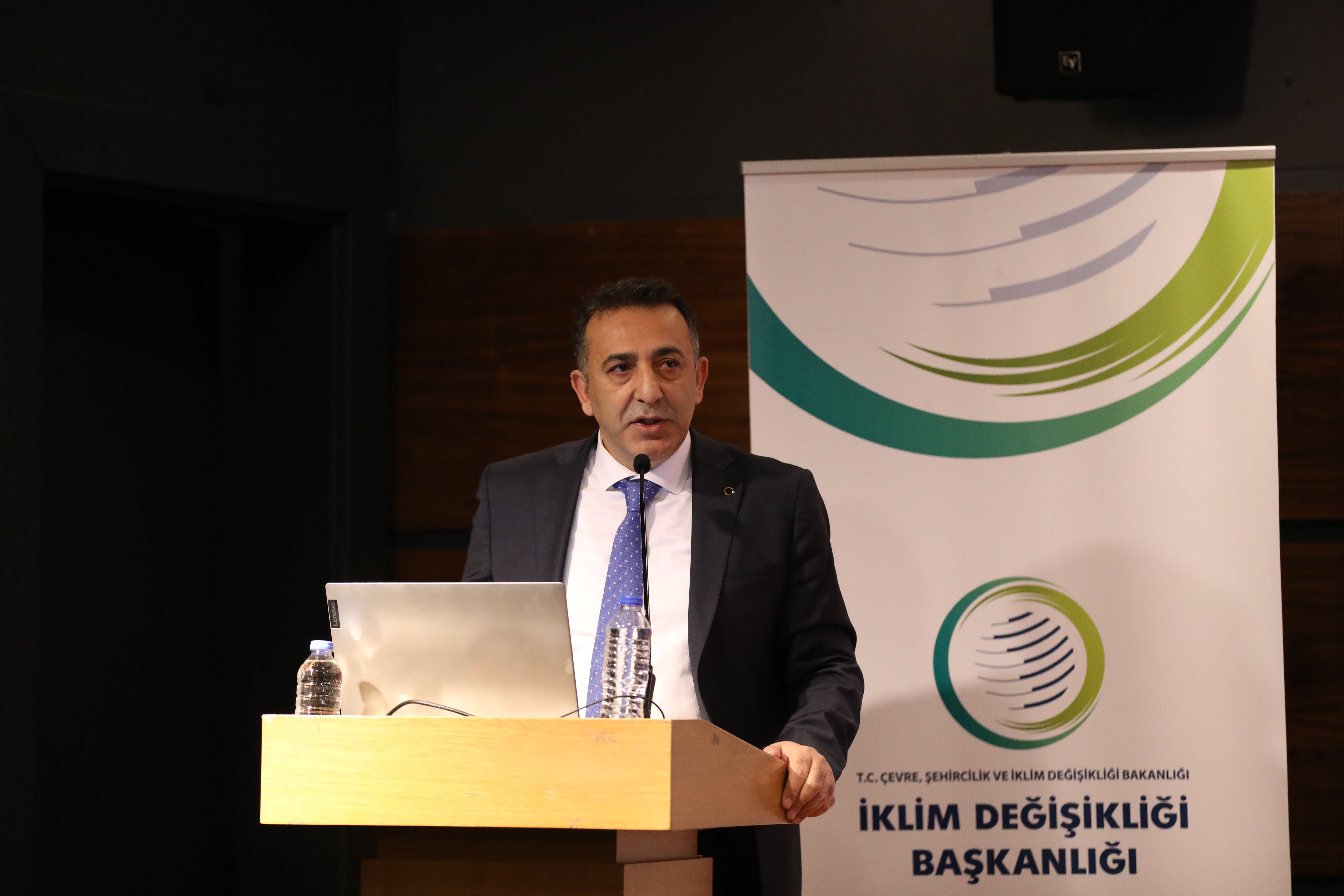
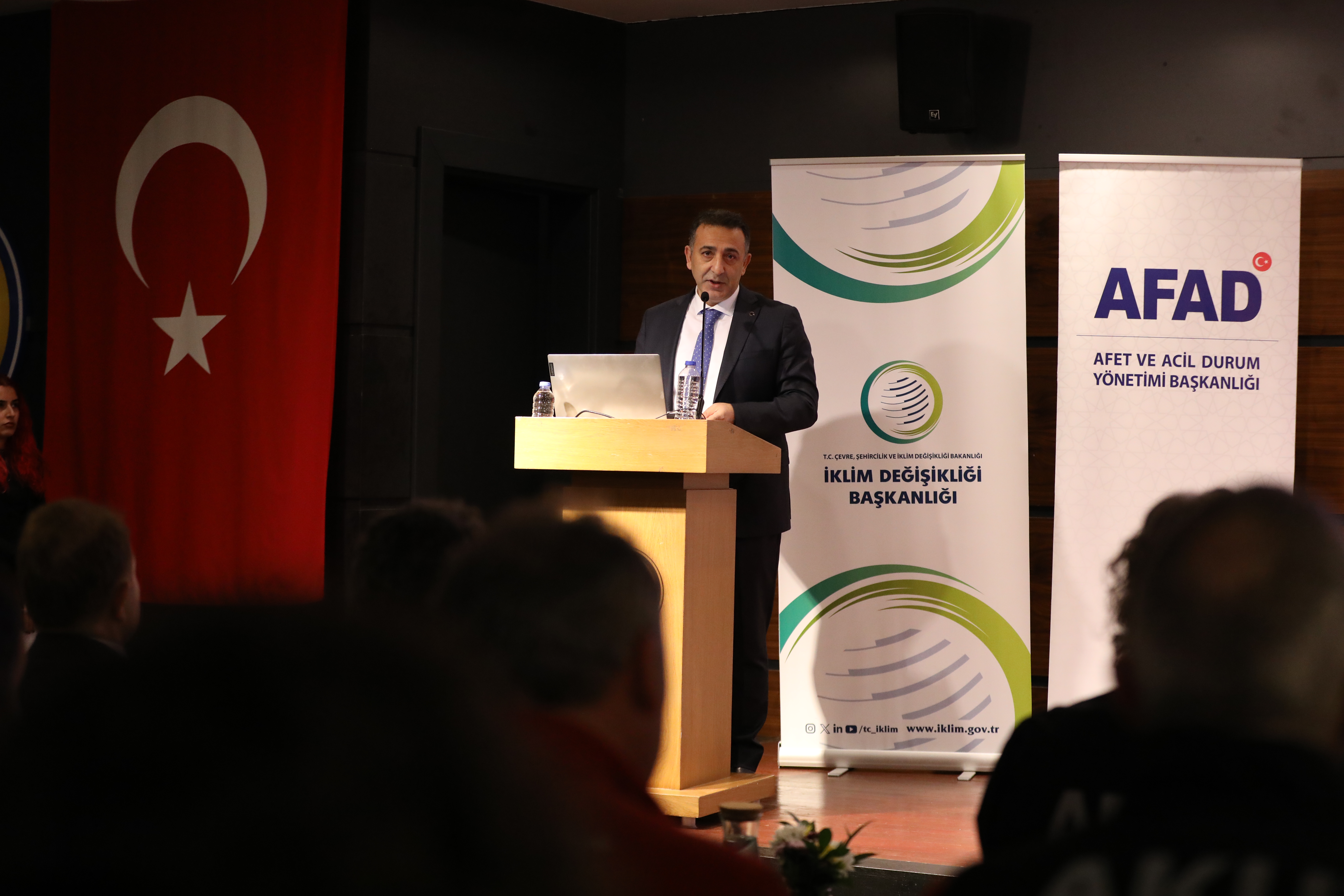
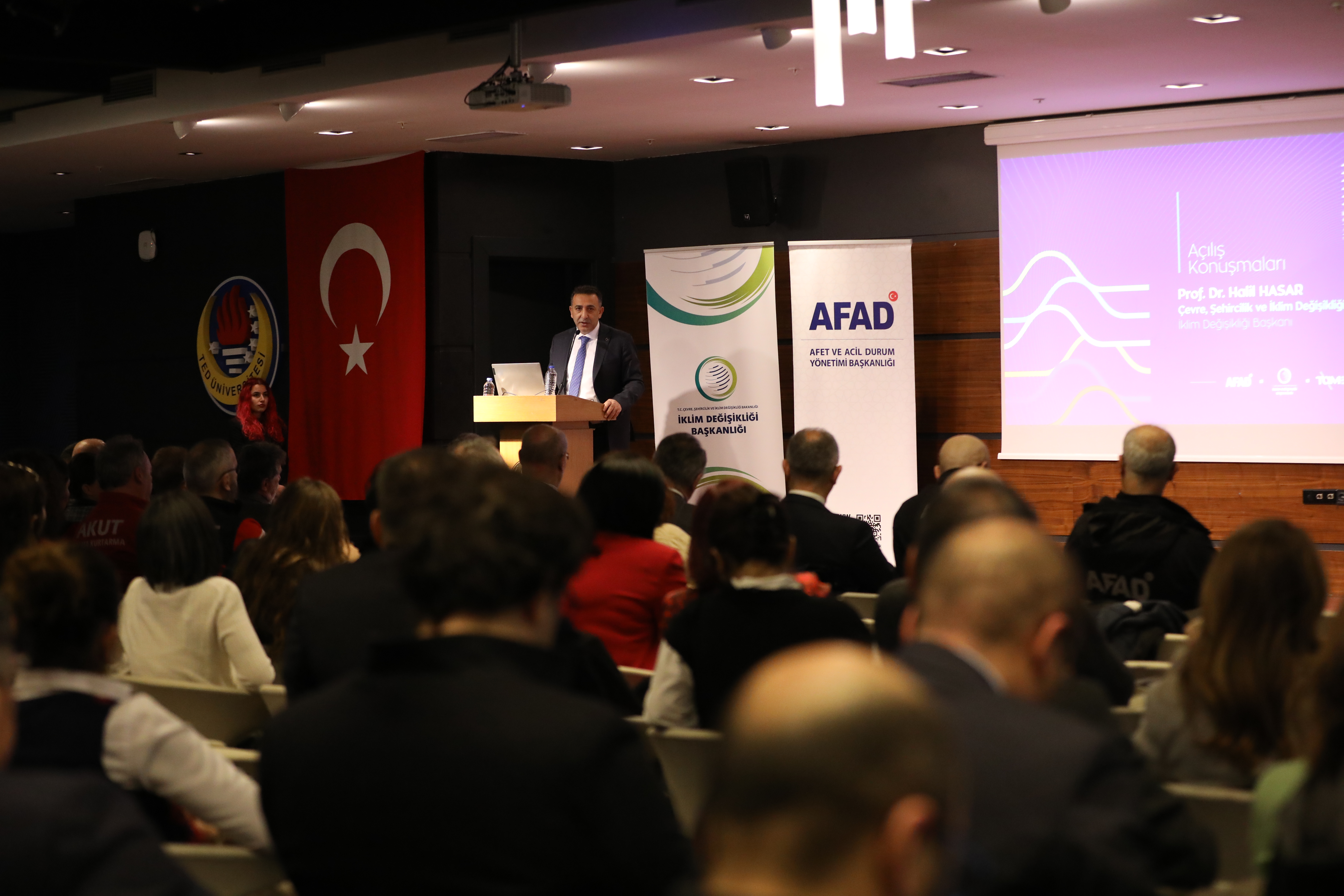
Director of Climate Change Prof. Halil Hasar attended a conference on the “Reduction and Management of Climate-Induced Disaster Risks.”
13 February 2025
Director of Climate Change Prof. Halil Hasar attended a conference on the “Reduction and Management of Climate-Induced Disaster Risks.” The conference, organized by TED University in Ankara, opened with an address by Prof. Halil Hasar, who noted that the world is changing rapidly and that this transformation is increasing both the frequency and severity of natural disasters.
Outlining the risks Türkiye and the wider world may face in the future, Hasar said that events such as floods, drought, extreme heat waves, and forest fires are no longer exceptional occurrences and that the world is confronting the danger of these phenomena becoming the new normal. Reviewing the efforts underway and the measures required to establish a more livable and sustainable climate policy in Türkiye, Hasar said:
“We are developing climate projections for Türkiye through 2100.”
To anticipate future climate conditions and to strengthen national climate strategies, we are developing climate projections for Türkiye through 2100. For the first time in the country, six global climate models that best reflect Türkiye’s atmospheric variables are being dynamically downscaled to a three-kilometer resolution in order to calculate national climate projections. Once completed, this work will enable long-term forecasting of where and when specific weather events are likely to occur across the country. These projections will support future preparedness in a wide range of fields, from urban planning to the formulation of agricultural policies. There is no doubt that this project will make a significant contribution to the strategies Türkiye will adopt on climate change in both its domestic and foreign policy agendas.
“The management of climate-induced disasters requires effective policies not only during crises but also before they occur.”
The steps needed to reduce the risks posed by climate-induced disasters and to build more resilient societies are clear. First, risks must be assessed in the light of scientific data, and sustainable solutions must be developed. To adapt to climate change, it is essential to cooperate with local governments, civil society organizations, and the private sector to build infrastructure that is more resilient to disasters. Adopting climate-friendly approaches in urban planning, strengthening disaster risk-reduction policies, and developing policies that reduce carbon emissions play a vital role in minimizing risks. Training programs, awareness-raising campaigns, and participatory approaches that engage all segments of society are among the cornerstones of this effort. Finally, the management of climate-induced disasters requires effective policies not only during crises but also before they occur.
“Building a more disaster-resilient country is within our reach”
Türkiye is located in the Mediterranean Basin, which is defined as one of the regions most vulnerable to the adverse impacts of climate change. Reducing emissions alone is not the sole solution in the fight against climate change. Even if all emissions were eliminated, the reality of disasters we would continue to face remains before us. In recent times, it has become possible to encounter a climate-induced disaster in almost any part of the world. Floods, wildfires, and drought are realities of the disasters we face. This situation deeply affects the food policies of many countries and underscores the need for effective solutions. Building a more disaster-resilient country is within our reach. That is why, as a nation, Türkiye must build a climate-resilient society and develop climate-resilient cities.
In addition to Prof. Halil Hasar, the conference was attended by TED University Rector Prof. İhsan Sabuncuoğlu, guest speaker Faruk Eczacıbaşı, AFAD administrators, and numerous invited participants from the Directorate of Climate Change and relevant institutions.