


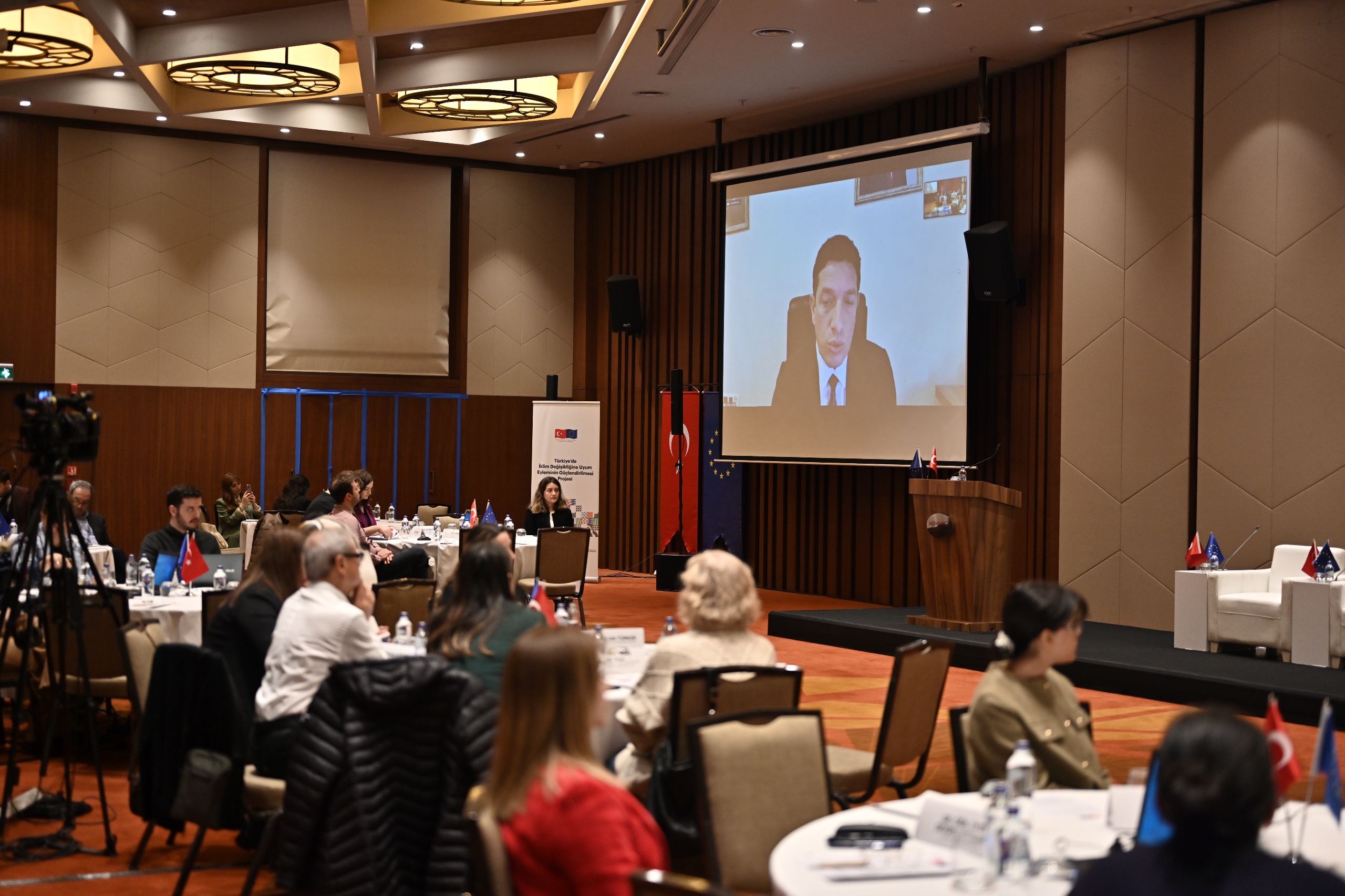
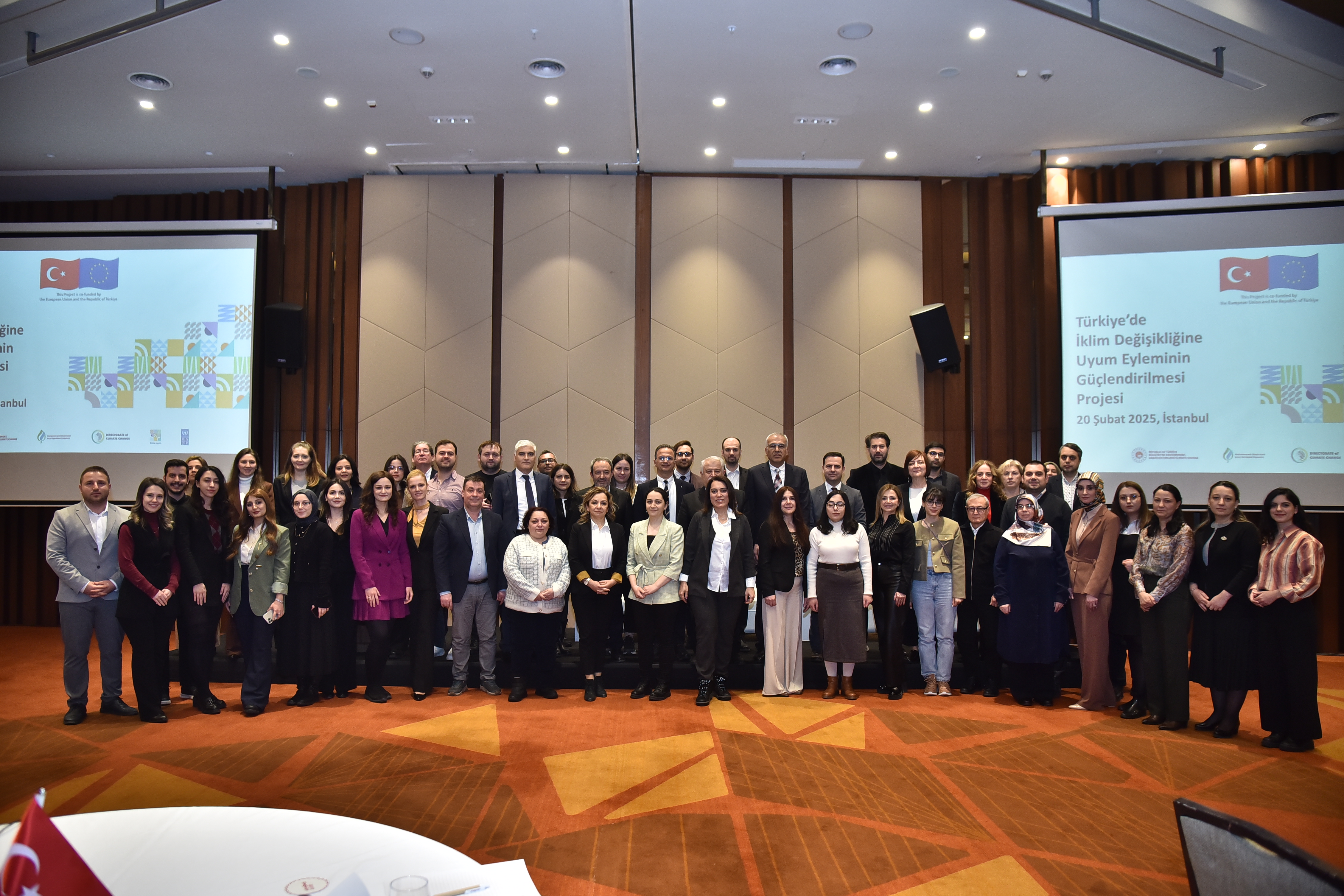
A conference was held in Istanbul under the “Enhancing Adaptation Action in Türkiye Project”, which is financed by the European Union and Türkiye.
20 February 2025
A conference was held in Istanbul under the “Enhancing Adaptation Action in Türkiye Project”, which is financed by the European Union and Türkiye.
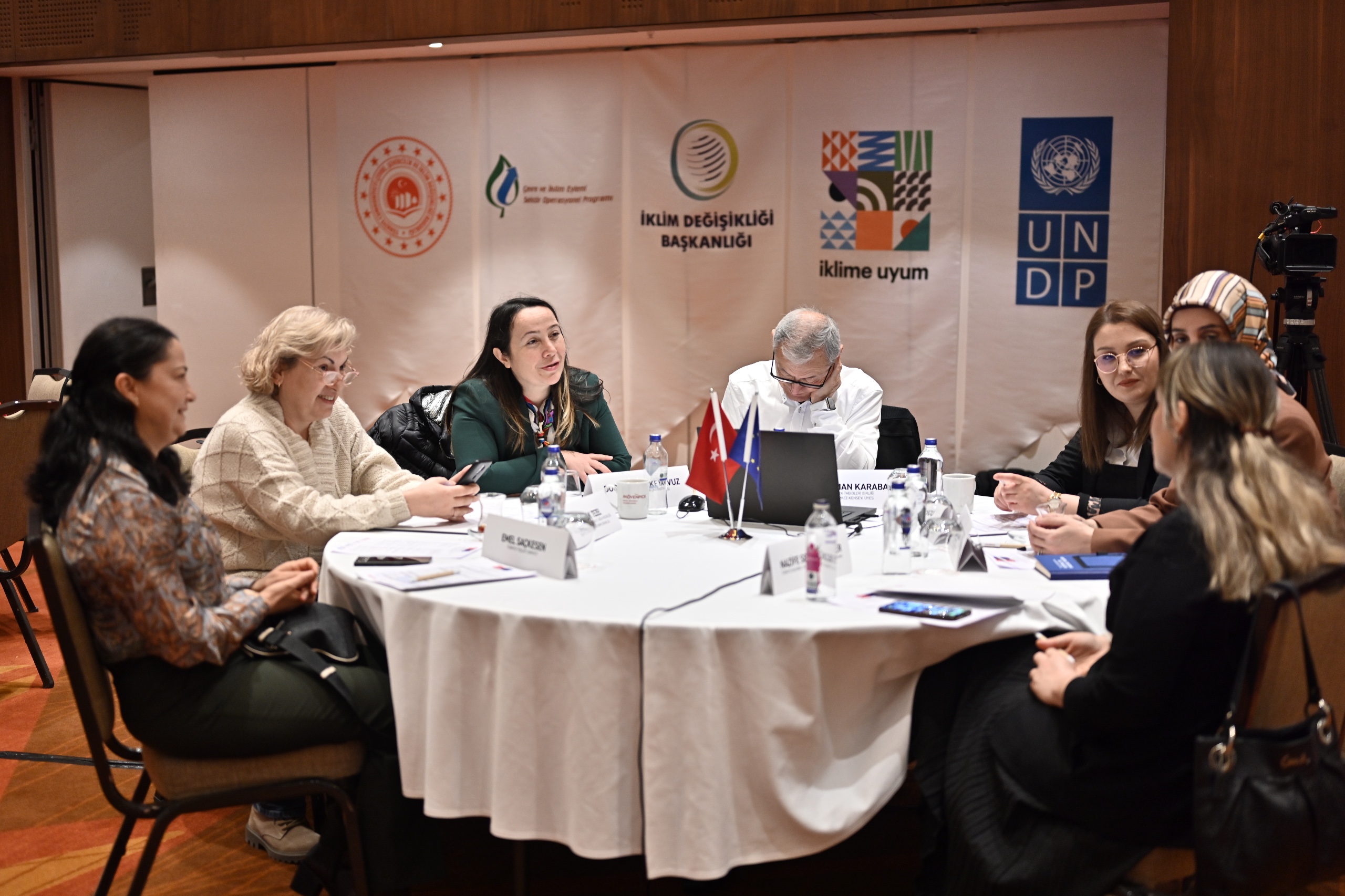
The awareness-raising event of the project, which is implemented by the United Nations Development Programme (UNDP) and for which the Ministry of Environment, Urbanization, and Climate Change serves as the beneficiary organization, was held in Istanbul under the title “Conference on Strengthening Public Health Responses to the Health Impacts of Climate Change at Social and Sectoral Levels.”
The conference addressed the impacts of climate change on health systems, while discussions focused on increasing awareness among health sector stakeholders and identifying practical solutions to strengthen the resilience of health systems to climate-related threats. Speaking at the opening session, Deputy Director of Climate Change Orhan Solak noted that climate change is one of the most critical global challenges of our time and that both Türkiye and the wider world are facing a growing number of climate-related disasters.
Pointing out that recent years have seen record-breaking temperatures and unprecedented changes in climate parameters, Solak said: “According to the World Meteorological Organization, 2024 was recorded as the warmest year in history. Global temperatures were 1.55 degrees higher than the pre-industrial period, making 2024 the first year in which the 1.5-degree threshold was exceeded. Each year between 2015 and 2024 ranked among the ten warmest years on record. Emphasizing that Türkiye is located in the Mediterranean climate basin—one of the regions most severely affected by climate change—Solak said: “Temperature increases in the Mediterranean Basin have reached nearly two degrees. According to data from the General Directorate of Meteorology, 2024 was also the warmest year in Türkiye since 1971. This rise in temperatures affects the entire climate system. It brings about serious consequences such as declining water resources, drought, reduced agricultural productivity, sea-level rise, and forest fires. In the decade from 2014 to 2023, the global cost of climate-related disasters exceeded USD 2 trillion. And this figure reflects only financial losses; when environmental and social costs are included, the real impact is far greater.”
Noting that the growing number of disasters and extreme events in both Türkiye and the world demonstrates the need for determined and well-designed climate policies, Solak continued:
“Combating climate change must be among our top priorities for a sustainable future.”
To secure a sustainable future, combating climate change must remain high on our agenda, and adaptation efforts must be prioritized. Droughts, floods, wildfires, and extreme heat waves driven by climate change are increasingly undermining living conditions and placing additional strain on health systems. Climate change is not merely an environmental issue. It is a multidimensional crisis with direct and serious consequences for public health. It also brings a wide range of health risks, including infectious diseases, respiratory illnesses, water-borne infections, and food security challenges. Unfortunately, medium- and long-term projections indicate that both the frequency and severity of these impacts will continue to increase.
“Our Directorate has prepared the Climate Change Adaptation Strategy and Action Plan.”
Our Directorate has prepared the Climate Change Adaptation Strategy and Action Plan. Within this framework, eleven priority sectors have been identified. Vulnerability and risk analyses have been carried out for each sector. These sectors include urban areas, water resources, public health, agriculture, fisheries and livestock, biodiversity and ecosystem services, energy, industry, transport and communication, tourism, cultural heritage, social development, and disaster risk management. Public health is one of the key sectors addressed under the Strategy. Two strategic objectives have been defined for the public health sector. The first objective is to strengthen evidence-based analysis, assessment, and reporting infrastructure in the health field and to scale up R&D activities related to climate change. The second objective is to strengthen capacity, cooperation, and awareness on climate change from a health perspective across all institutions and organizations at both national and local levels.
The conference also featured panel sessions titled “Health and Sectoral Impacts of Climate Change”, “Climate Change Adaptation in Health”, “Infectious Diseases, Environmental Health, and Climate Change”, and “Preparing Local Climate Change and Health Action Plans”. In addition to Deputy Director Solak, the event was attended by UNDP Türkiye Project Manager Gizem Bal, President of the Turkish Academy of Sciences Prof. Muzaffer Şeker, Director General of Health Promotion Assoc. Prof. Muhammed Atak, expert panelists, and numerous invited participants.