


Deputy Minister of Environment, Urbanization and Climate Change and Chief Climate Negotiator Fatma Varank: “Türkiye is taking decisive steps toward its 2053 Net Zero Emission target.”
15 September 2024
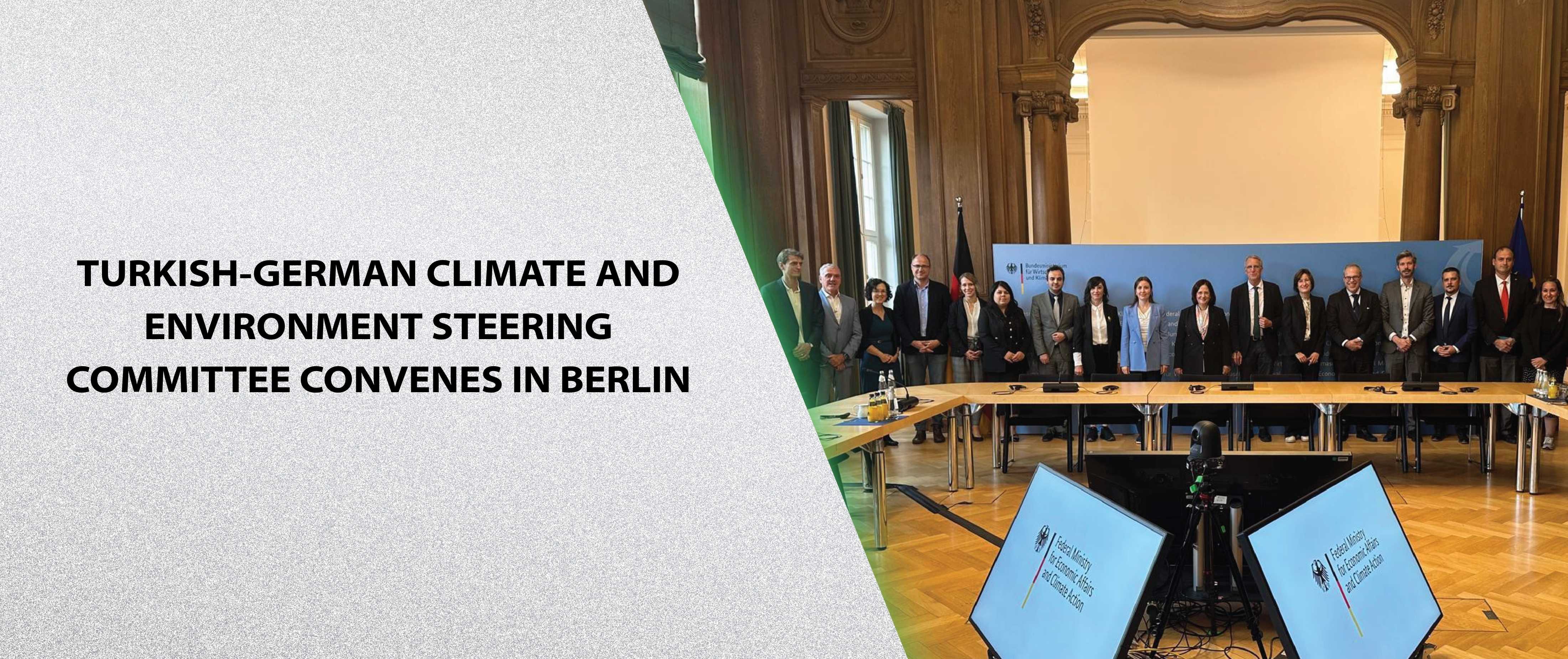
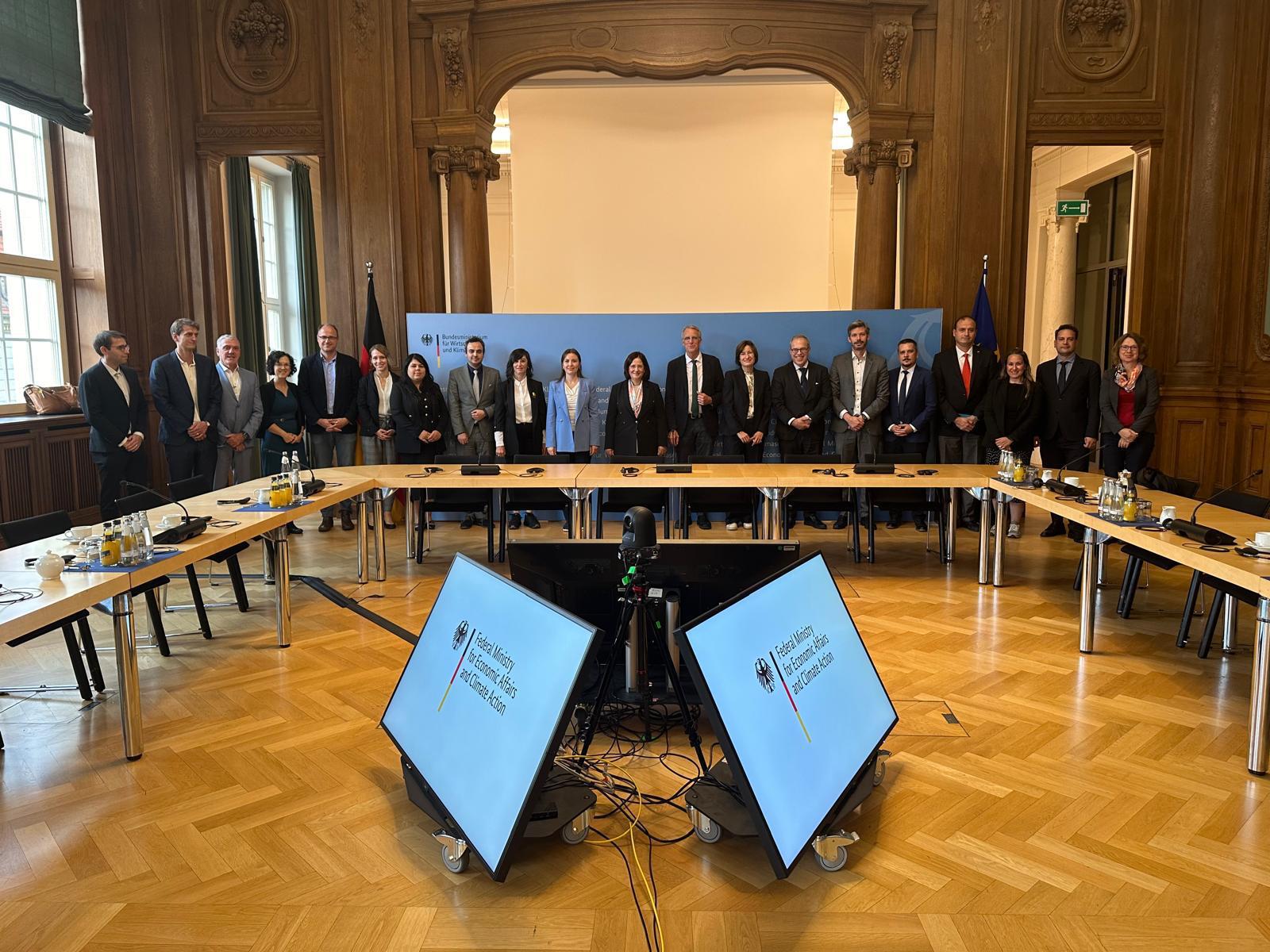
Recognizing the climate crisis as the preeminent global challenge of the 21st century, the “Memorandum of Understanding on the Climate and Environment Steering Committee” was signed in Dubai on December 9, 2023. In fulfillment of this agreement, the inaugural Turkish-German Climate and Environment Steering Committee meeting was held in Berlin on September 11.
The Turkish delegation was led by Fatma Varank, Deputy Minister of Environment, Urbanization, and Climate Change and Chief Climate Negotiator, accompanied by Dr. Tuğba Dinçbaş, Deputy Director of Climate Change. The delegation also included senior experts from the Directorate’s Department of Climate Negotiations and International Policies, the Department of Climate Finance and Incentives, and the Department of Monitoring of Greenhouse Gas Emissions.
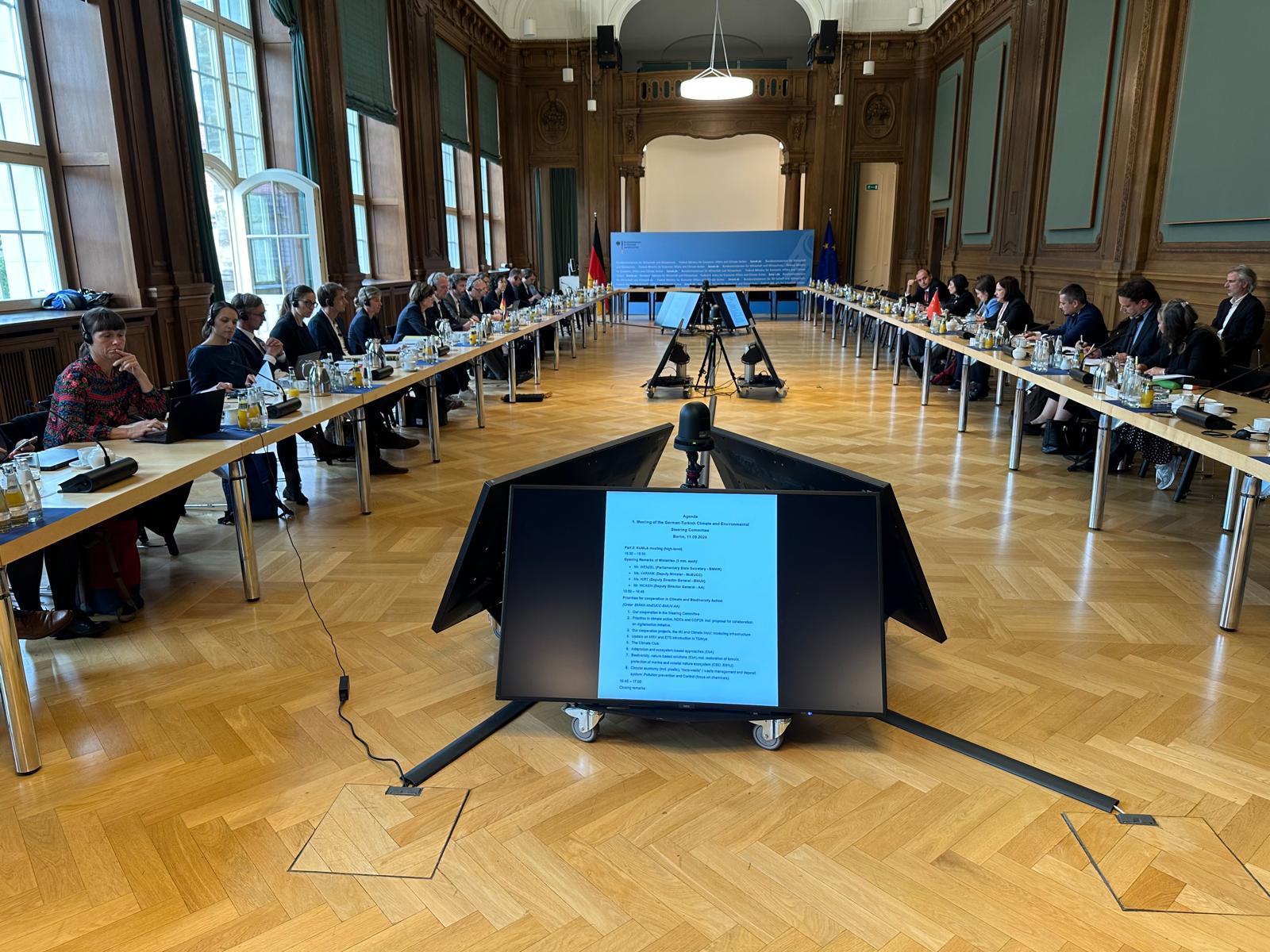
The high-level segment opened with a keynote by Stefan Wenzel, Parliamentary State Secretary at the German Federal Ministry for Economic Affairs and Climate Action. Additional opening remarks were delivered by Fatma Varank, Deputy Minister of Environment, Urbanization, and Climate Change and Chief Climate Negotiator, Ilka Hirt, Deputy Director General for International Policy at the German Federal Ministry for the Environment, Nature Conservation, Nuclear Safety and Consumer Protection, and Marcus Hicken, Director for Energy Diplomacy, Climate, and Security at the Federal Foreign Office.
During her address, Deputy Minister Fatma Varank underscored Türkiye’s unwavering commitment to its 2053 Net Zero target: “Türkiye continues to implement landmark initiatives through the coordinated efforts of public institutions, local governments, NGOs, and the private sector. Following our accession to the Paris Agreement, President Recep Tayyip Erdoğan announced our 2053 Net Zero Emissions target. And Türkiye is taking decisive steps toward its 2053 Net Zero Emission target.”
The high-level sessions focused on strategic priorities for cooperation in climate and biodiversity action. The Steering Committee deliberated on key thematic areas, including climate action, Nationally Determined Contributions (NDCs), Türkiye’s digitalization initiatives, and climate modeling infrastructure. Deputy Minister Varank noted that holding annual high-level meetings complemented by regular technical-level online consultations would facilitate a highly productive exchange of institutional expertise. The partnership also reviewed the "Monitoring, Reporting, and Verification (MRV) of Greenhouse Gas Emissions Project" and the "New Interface Project."
Deputy Minister Varank highlighted that Türkiye continues to implement comprehensive and essential climate action projects, several of which are being executed within the framework of Turkish-German cooperation. Deputy Minister Varank further expressed her aspiration for a sustained and productive partnership through the upcoming projects under the International Climate Initiative (IKI), specifically the "Supporting Türkiye in its Climate and Biodiversity Goals" and the "Climate Diplomacy" projects. The subsequent sessions also addressed the negotiation processes for the 29th Conference of the Parties (COP29).
Discussions covered the Climate Club, Ecosystem-based Adaptation (EbA), Nature-based Solutions (NbS), forest restoration, the protection of marine and coastal ecosystems, the circular economy, Zero Waste/waste management, and pollution prevention. Deputy Minister Varank announced that Türkiye will unveil its Long-Term Climate Strategy at the 29th Conference of the Parties to the United Nations Framework Convention on Climate Change (COP29), which is schedules to take place in Baku this November. She noted that significant progress continues through the development of various sectoral strategic plans.
“The National Energy Plan, the Energy Efficiency Action Plan, Low-Carbon Roadmaps for Industry, the Circular Economy Action Plan, the Building Decarbonization Roadmap, the Green Deal Action Plan, and the National Employment Strategy serve as primary examples of these initiatives,” said Deputy Minister Varank.
In the concluding segment, the Deputy Minister Fatma Varank provided in-depth briefings on Türkiye's Climate Change Mitigation Strategy and Action Plan, its Long-Term Strategy, and the forthcoming Climate Law.