


Director of Climate Change Prof. Halil Hasar delivered press remarks on Türkiye’s first Climate Law, which was submitted to the Grand National Assembly of Türkiye (GNAT) this week.
26 February 2025
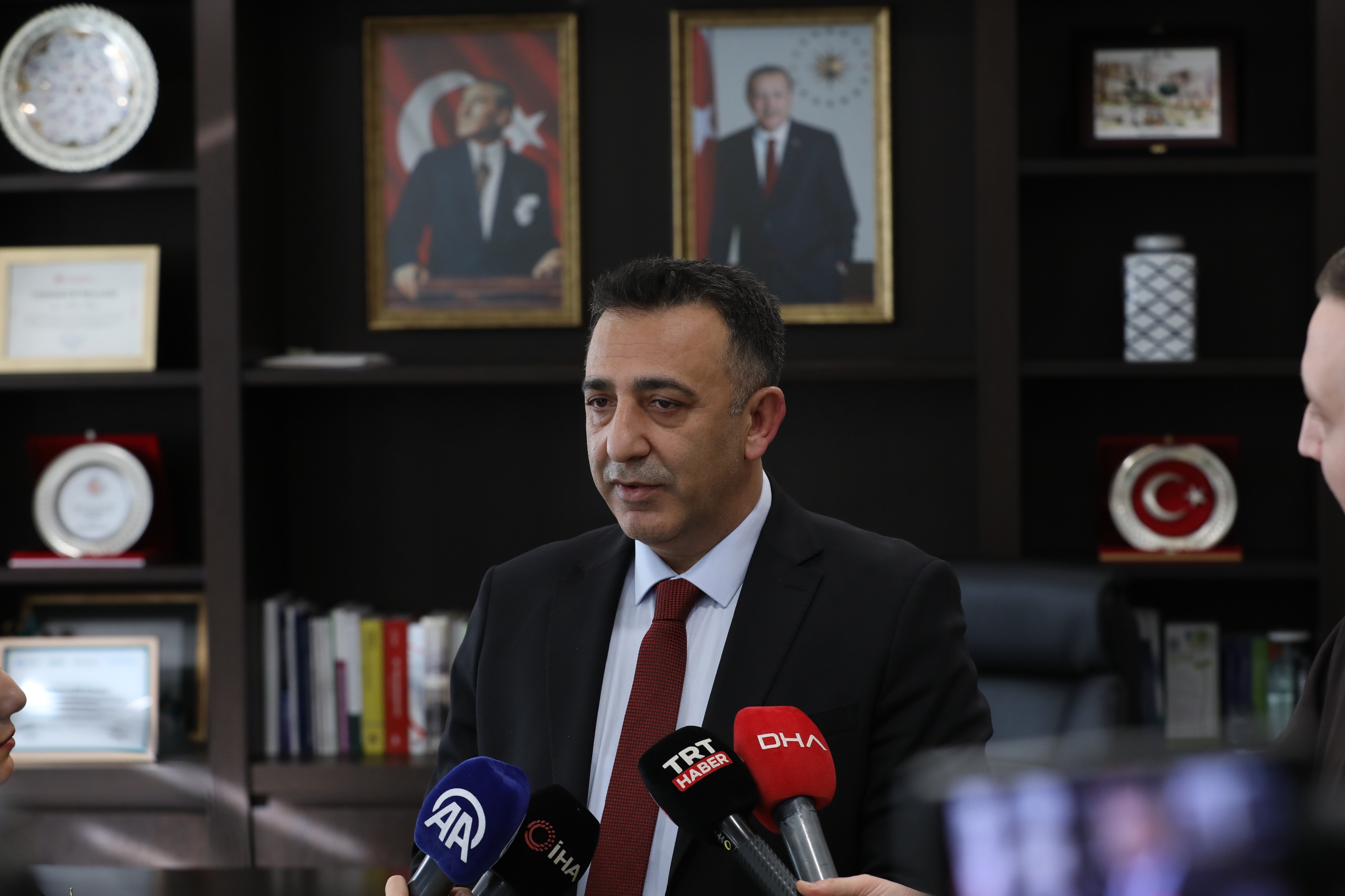
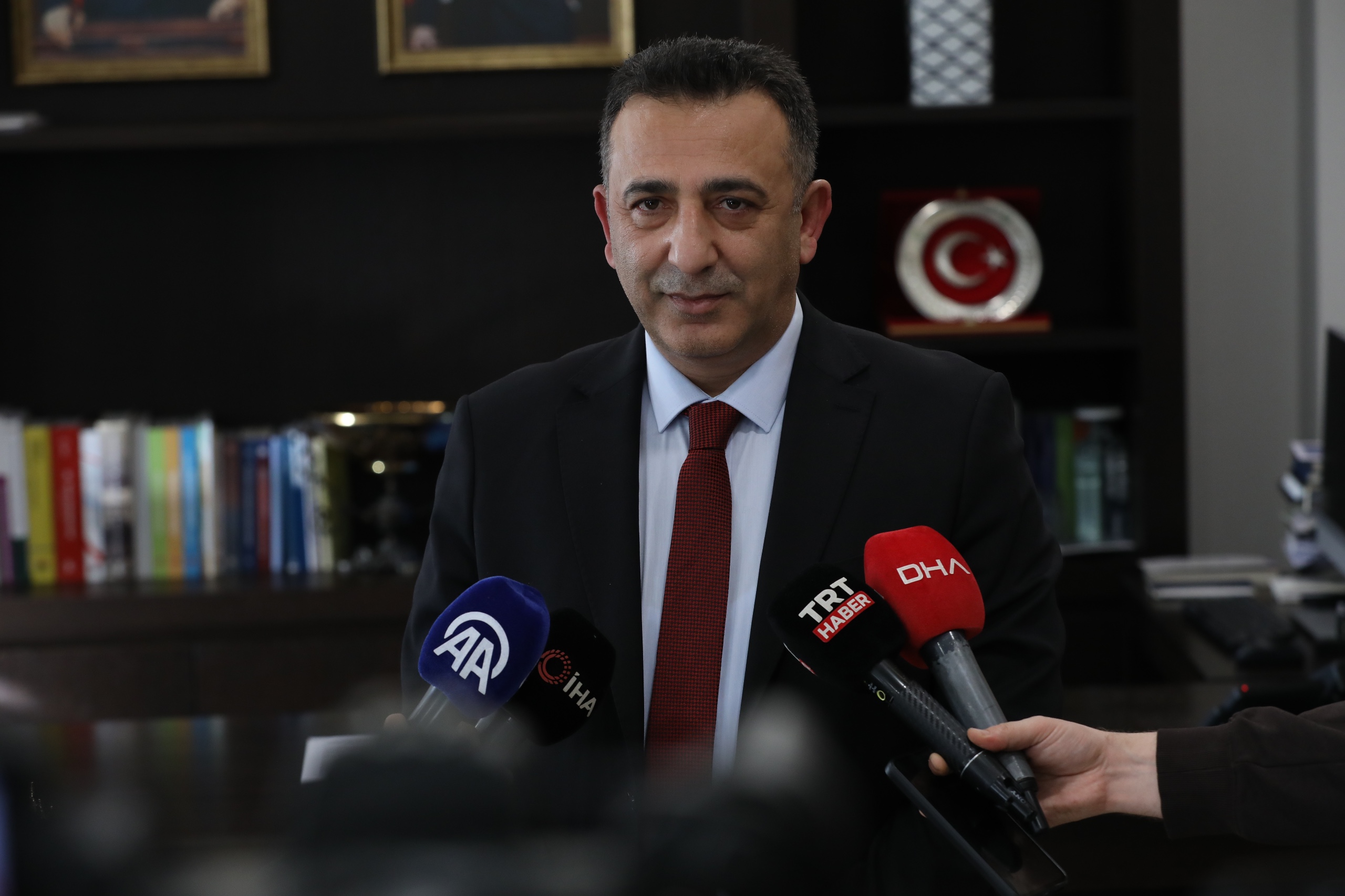
Director of Climate Change Prof. Halil Hasar delivered press remarks on Türkiye’s first Climate Law, which was submitted to the Grand National Assembly of Türkiye (GNAT) this week. Speaking to reporters from TRT Haber, Anadolu Agency, İHA, and DHA, Prof. Hasar responded to questions of public interest and provided a comprehensive assessment of the draft Climate Law. Noting that the draft Climate Law, which is expected to be brought before the General Assembly in the coming days, has been under preparation for an extended period, Prof. Hasar indicated that the Climate Law represents a comprehensive regulatory framework developed through the technical input of universities, civil society organizations, governmental agencies, and other stakeholders.
Emphasizing that Türkiye, which lies within the Mediterranean climate basin, is highly exposed to climate-related disasters, Prof. Hasar said: “The Climate Law may be viewed as overdue. We needed to establish a firm legal basis for this struggle. The law offers significant advantages in combating the climate crisis. It constitutes an essential legal mechanism for building more resilient societies and a more resilient economic environment. The inclusion of the Emissions Trading System is particularly important.”
Addressing the far-reaching impacts of climate change, Prof. Hasar highlighted the following points in his remarks:
“Rising temperatures will affect our food supply and water resources”
Climate change has wide-ranging implications. Countries must engage in a collective effort to address this challenge. And Türkiye is taking its place in that global response. Our world has truly become a place grappling with the climate crisis. In particular, average temperature increases beyond certain thresholds will affect our food supply and water resources. That is why, we need a robust adaptation process. Our cities must become more resilient. The Climate Law is a comprehensive legal framework that addresses these needs, introduces precautionary measures, and assigns responsibilities to relevant institutions and organizations. The core objective of the Climate Law is to support the 2053 Net Zero Emissions Target and Green Development. It is designed to prepare society for this transformation and to build resilience. It will position our country to become more resilient not only to climate risks but also to competitive pressures, enabling us to reach our 2053 target with greater confidence and with concrete benchmarks.
“The Directorate of Climate Change will serve as the lead coordinating authority”
The Directorate of Climate Change will serve as the lead coordinating authority for the implementation of the law. A range of duties will be carried out at both national and local levels. To this end, Climate Change and Adaptation Coordination Boards will be established locally. Under the leadership of governors in each province, local coordination boards will support the process by developing strategies and action plans aligned with the climate characteristics of their respective cities.